Two disappointing espressos can feel identical and be exact opposites in the cup. One is sharp and lemony, gone almost before you swallow. The other sits on your tongue like burnt toast and refuses to leave. Learning to tell them apart is the most useful skill in dialing in, because it turns a vague "this isn't right" into a direction to move.
The short version: sour usually means under-extracted, bitter usually means over-extracted. The longer version is a handful of specific causes, several of which have nothing to do with the grind. Work through this checklist in order and you will spend less time guessing and more time drinking.
Sour and Bitter Are Opposite Problems
Extraction is a sequence. Hot water hits the puck and dissolves the bright acids first, then the sugars and body, and finally the bitter, drying compounds. Stop early and you get the acids without the sweetness that should balance them. Run too long and you strip out the harsh material along with everything else.
That is why a sour shot tastes thin and sharp, sometimes almost salty, with a quick finish. A bitter shot is drying and ashy, heavy in an unpleasant way, and the aftertaste hangs around. A shot can be both at once, which usually points to water finding a shortcut through the puck rather than a grind problem.
One caveat before the lists: a very light roast can be genuinely acidic, and a dark roast can be genuinely bitter, without anything being wrong. Judge changes rather than absolutes. If the shot gets sweeter when you grind finer, the sourness was under-extraction.
The Sour Shot: An Under-Extraction Checklist
Change one thing at a time, and taste after each change. Two adjustments at once will tell you nothing.
- The grind is too coarse. The most common cause. Water passes through before it can pick up sweetness. If 18g in produces 36g out in under 20 seconds and the stream turns blond early, grind finer.
- The dose is too low for the basket. Too much headspace leaves the puck loose and the water finds the easiest path. An 18g basket is happiest with roughly 17g to 19g in it, depending on the blend.
- The shot is cut too short. Stopping at 20g out from an 18g dose gives you the acidic front of the extraction and none of the sweetness behind it. Try 1:2 as a baseline before judging.
- The water is too cool. Most machines sit somewhere in the low nineties Celsius. A light roast often needs slightly more heat to soften its acidity; a couple of degrees can change the cup noticeably.
- The beans are stale, or too fresh. Coffee roasted two days ago can gush and taste sour and gassy. Coffee roasted six months ago tastes flat and hollow. Aim for roughly one to four weeks off roast.
- The coffee is a bright, light roast. Citrus, red fruit and a juicy finish are features, not faults. If it is pleasant rather than sharp, you are done.
To correct sourness, grind finer in small steps and keep the dose and yield fixed while you do it. If the grinder is already at its finest setting, increase the dose slightly or extend the yield. Both give the water more coffee and more contact time.
The Bitter Shot: An Over-Extraction Checklist
- The grind is too fine. The shot chokes, drips slowly, then gushes as the puck cracks under pressure. Long contact time plus uneven flow equals bitterness.
- The yield is too long. Pulling 50g from an 18g dose will extract the drying compounds along with the sugars. Pull 36g and compare.
- The water is too hot. Above roughly 96°C you start scalding the puck. Darker roasts are more sensitive to this than light ones.
- The coffee is dark-roasted or heavy on robusta. Those beans are bitter by design. Shorten the yield to 1:1.5 and drop the temperature a degree.
- The equipment is dirty. Old oils in the group head and on the basket taste bitter and rancid no matter what you do with the grind. Backflush and clean the shower screen.
- The puck is being over-filled. A dose that touches the shower screen leaves a bitter, muddy cup and a mangled puck.
For bitterness, go coarser in small increments, shorten the yield slightly, then lower the temperature. Give each change two shots before you decide. One shot tells you about that shot; two tell you about the setting.
Both at Once: Channeling, Not Extraction
If a shot is sour and bitter in the same mouthful, with a hollow middle, the problem is usually uneven extraction. Water punches a channel through one part of the puck. That channel is over-extracted and tastes ashy; the rest of the coffee is barely touched and tastes sour. The two faults arrive together.
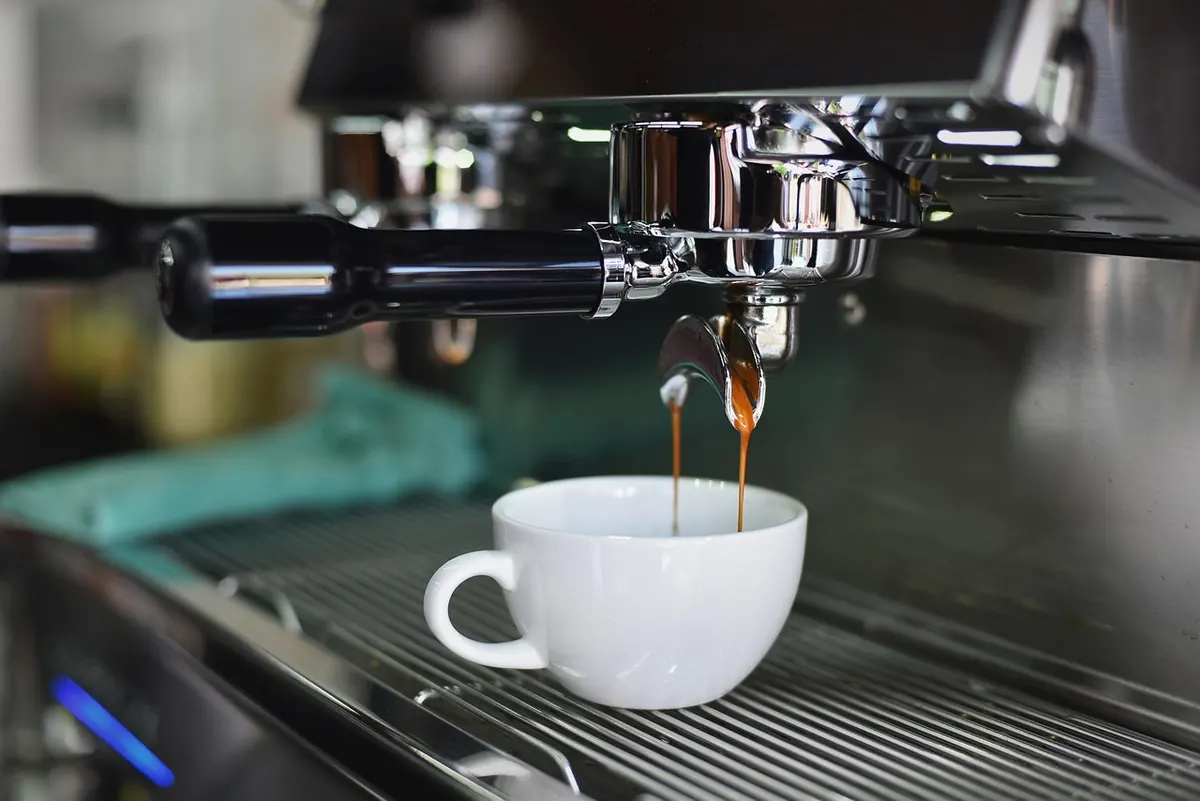
Look for the signs: a sudden blond gush from one side of the basket, spurting from the spouts, a puck with a visible hole or crack in it, or a soupy, sloppy puck after the shot. Fixing it is about preparation, not grind size. Distribute the grounds properly before tamping, tamp level rather than hard, and dose so the puck fills the basket without hitting the screen. If your grinder produces clumps, break them up. A bottomless portafilter is the cheapest diagnostic tool you can own, because it shows you exactly where the water is going.
Change One Variable at a Time, in This Order
Random tweaking is how people spend an hour and end up with colder coffee than they started with. Use this order:
- Dose and basket. Choose a dose that fits the basket properly and keep it fixed for the whole session.
- Yield. Set a ratio. Start at 1:2 — 18g in, 36g out — and note the time.
- Grind. Adjust to bring the shot into roughly 25 to 30 seconds, then taste. Time is a symptom, not a target.
- Temperature. Nudge it a degree at a time only after dose, yield and grind are settled.
- Ratio. Fine-tune the yield for the roast: a touch longer for light coffees, shorter for dark ones.
Keep a note of what you changed and what happened. Three lines per shot is enough, and it stops you from repeating the same failed adjustment next weekend.
When the Coffee Is the Problem
Some cups cannot be fixed at the grinder. A stale bag tastes flat, papery or cardboard-like, and no amount of fine grinding brings back sweetness. A very dark roast will always finish bitter; the answer there is a shorter, cooler shot rather than a coarser grind. Blends with a lot of robusta are earthy and drying by nature. Water matters too: extremely soft water can make coffee taste thin and oddly sour, while very hard water mutes the cup and pushes bitterness forward. If your machine is plumbed or you always use the same water, try one bottle of a neutral-tasting mineral water as a test.
Keep This by the Machine
- Sour? Grind finer, extend the yield, check the temperature.
- Bitter? Grind coarser, shorten the yield, clean the group head.
- Both? Fix distribution and channeling before touching the grinder.
- Change one variable, pull two shots, then judge.
- Keep dose fixed and let the grind do the work.
- If it is stale or very dark, adjust the recipe rather than chasing the grinder.
Most espresso problems are not mysteries. They are one of two directions, and you now have a way to tell which. Taste, name the fault, make a single change, taste again. The whole loop takes a few minutes — and it is far more reliable than hoping the next shot magically behaves.
Photo: Engin_Akyurt / Pixabay