It is 7:40 in the morning and the bar is already loud. Three people are leaning on the counter, someone is calling an order over the hiss of the steam wand, and a man in a suit is holding a small slip of paper as if it were a boarding pass. Nobody looks confused except you. The good news is that Italian coffee bars run on a handful of unwritten habits, and once you know five or six of them you can walk into any bar from Trieste to Trapani and get what you wanted, in the right order, without a word of embarrassment.
Start at the counter, not at the table
In Italy a bar is a coffee bar first and a place to sit second. The counter — il banco — is the default position: you order, you drink standing, you leave. Sitting down is a different service with a different price, and in city centres or on a famous piazza the gap between the two can be startling. Drinks taken at a table may carry a table surcharge or a servizio line on the bill, and the bar is not obliged to warn you beyond the price list.
So look before you land. If the place is busy and full of people standing with tiny cups, join them. If you want a table, wait to be seated or ask, and expect to order from a waiter rather than at the counter. Dropping onto a chair in a crowded bar and then queueing at the register confuses everyone, including the person who now has to serve you twice. Prices are normally displayed near the register or on a board; table prices are often listed separately.
Where to pay, and when
This is the thing that trips up most visitors, and the honest answer is that it varies by city and by bar. Two systems live side by side.
Pay first. Common in Rome, across Lazio and much of central and southern Italy. You go to the register (la cassa), say what you want, pay, and receive a small receipt — lo scontrino. Then you take that slip to the barista, who makes your coffee. Keep the slip until you walk out; you may be asked for it, and it is your proof of purchase.
Pay last. Common in the north — Milan, Turin, Bologna — and in bars with table service. You order at the counter or from a waiter, drink, and settle at the register on your way out.
If you cannot tell which system is in front of you, ask. “Si paga prima o dopo?” is a perfectly normal question and no one will think less of you. Otherwise, watch the person ahead of you for ten seconds and copy them.
- Enter, greet the room with a buongiorno, and glance at the register.
- Pay at the cassa if that is the system, and take your scontrino.
- Order at the counter with the receipt in hand or on the counter in front of you.
- Drink standing, return the cup, and leave. Say grazie, arrivederci on the way out.
What to order without decoding a menu
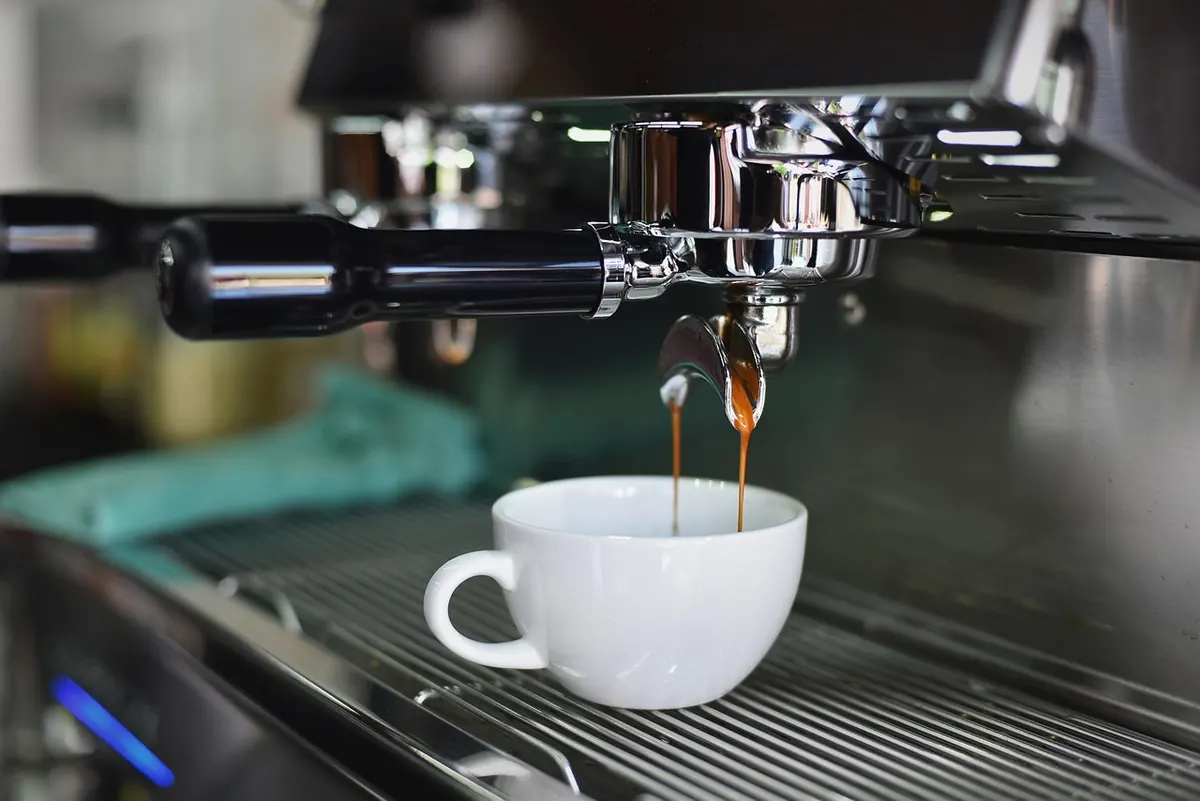
Un caffè means espresso: a small, strong cup, usually drunk in under two minutes. Saying “espresso” also works. What you will not easily find is a large mug of filter coffee, and if you ask for “a latte” you will be handed a glass of milk — order a latte macchiato if that is what you meant.
The core orders
- Caffè — espresso, the default.
- Caffè doppio — a double; ristretto and lungo for a shorter or longer pull.
- Caffè macchiato — espresso “stained” with a drop of milk. Latte macchiato is the reverse: mostly milk, in a tall glass.
- Cappuccino — espresso, steamed milk and foam in a larger cup; the standard breakfast drink.
- Marocchino — espresso with milk foam and a dusting of cocoa, a northern speciality.
- Corretto — “corrected” with a splash of grappa or liqueur. Ask what is available.
- Decaffeinato or simply un deca — decaf.
- Caffè d’orzo — roasted barley, caffeine-free, and a good choice for children or late evenings. Ginseng is the sweet, creamy alternative you will see everywhere.
- Caffè shakerato and caffè freddo — the summer answers: espresso shaken with ice, or a sweetened cold espresso served over ice.
A small glass of water alongside your coffee is normal; ask for un bicchiere d’acqua and you may get it free, or be offered a bottle to pay for. An affogato — espresso poured over a scoop of gelato — is a dessert, not a coffee break, and is best ordered when the bar is quiet.
Counter manners that read as respect
Baristas are fast, often juggling six orders, and they are not being rude when they seem brisk. A few small moves keep you on the right side of the counter.
- Order clearly and once. “Per favore, un caffè e un cornetto” is enough; add scusi to catch an eye rather than waving.
- Stand near the machine, not at the far end of the counter, and leave space for people collecting drinks.
- Have your receipt ready if the bar works that way, and do not push money at the barista mid-order — wait for the total.
- Pay separately if you are in a group, but order together where you can; splitting one bill into five is fine, doing it at peak time is less welcome.
- Take one napkin and one spoon. Sugar is usually in sachets on the counter.
- Ask about the bathroom before you use it: “Il bagno?” Some bars keep a key behind the counter.
The cappuccino question
Yes, you can order a cappuccino after lunch. No law forbids it and no barista will refuse. What you may notice is a raised eyebrow, because most Italians treat milk drinks as breakfast or mid-morning food and switch to espresso after a meal. If you want to blend in, take your cappuccino before 11 and your caffè macchiato afterwards. If you want the cappuccino, order the cappuccino and enjoy it. The habit is a preference, not a rule, and a bar in a touristy square has seen far stranger requests before ten o’clock.
Timing, tipping and small change
Bars open early, often by 6 or 7, and the rush runs from about 7:30 to 9:30 — order fast, drink fast, move on. Many close for a few hours in the afternoon, and plenty shut one day a week, so do not assume the place on the corner will be open at four. From roughly six in the evening the same counter turns into aperitivo hour, with spritz, wine and a bowl of snacks; prices may rise for tables, so ask for the conto rather than guessing.
Tipping is not expected. Rounding up or leaving a coin is a nice gesture and nothing more. Cards are accepted in most bars these days, though a handful of small places still prefer cash for a single coffee, so keep a few euros in coins. And in Naples you may come across the caffè sospeso: a coffee paid for in advance by one customer for a stranger who cannot afford one. If you see it on the board, it is exactly what it sounds like.
A short checklist before you order
- Look at the room: standing at the counter or sitting at a table? Check the price list.
- Find the register and work out whether you pay before or after.
- Greet, order, and keep the scontrino if you are given one.
- Drink at the bar, in a small cup, without rushing the barista.
- Settle up, round up if you like, and say goodbye.
That is the whole system. Learn it once in a bar near your hotel, and every other bar in the country becomes easy: the same words, the same small rituals, the same two-euro pleasure that starts the morning properly.
Photo: Ayşenur / Pexels