Home espresso has a way of humbling people. You buy a decent machine, a burr grinder, a bag of beans with a roast date printed on it, and the first shot tastes like hot lemon water. The second runs so fast it's basically brown tea. By the third you're convinced the machine is broken.
It usually isn't. What's missing is a repeatable method — one where you change a single thing at a time and let your tongue, not the pressure gauge, tell you what happened. The process below works on almost any setup, from a modest single-boiler to a heat exchanger with a PID.
Before You Touch the Grinder
Dialing in is a conversation between coffee and water. If either side is off, the numbers won't save you. Spend two minutes checking the basics before you chase a grind setting around.
- Fresh beans with a roast date. A bag with an actual date is a good sign. Espresso wants coffee that has rested a few days but isn't ancient; beans that are months old will gush and taste flat, no matter what you do.
- A burr grinder. Blade grinders produce a mix of dust and boulders that no amount of technique can fix. This matters more than the machine.
- A scale that reads 0.1 g. Cheap and small is fine. You need to know your dose and your yield, not guess them.
- The right basket. A basket rated for 18 g wants roughly 18 g. Underfilling leaves a soupy puck and a fast, uneven shot.
- A clean, hot machine. Give it 15 to 20 minutes to come to temperature, flush the group briefly, and keep the portafilter in the group head so the basket isn't cold.
If you're using pre-ground supermarket coffee, stop here. Without grind control there is no dial-in, only damage limitation.
Fix the Dose and Leave It Alone
The dose is your foundation. Pick a number that suits your basket — 18 g is a common starting point for a double, 16 g for a slightly smaller basket — and commit to it for the whole session. Weigh the beans, not the ground coffee, and weigh them every single time. A half-gram drift changes how the puck resists water, and you'll spend the morning chasing a variable you introduced yourself.
If you single dose, a small cup on the scale makes this quick. If you grind from a hopper, weigh the basket: tare it empty, grind into it, top up or spoon out until you hit your number. Annoying at first, automatic within a week.
Grind Is the Dial, Prep Is the Steering
Grind size is the one variable you'll adjust most, because it's the one that changes how fast water moves through the puck. Finer means more resistance and a slower shot; coarser means less resistance and a faster one. Change it in small steps — on most grinders, a couple of clicks, or a fraction of a number on an espresso-focused dial — and never make two changes at once.
Puck prep decides whether that grind gets a fair test. Distribute before you tamp: a few stirs with a needle tool or a quick shake to level the bed, then a straight, firm tamp with no sideways lean. You aren't pressing hard enough to matter much; you're pressing flat. A sloping or cracked puck sends water down one side, and the shot will taste thin and harsh however good your grind setting is.
Signs of a channeled puck
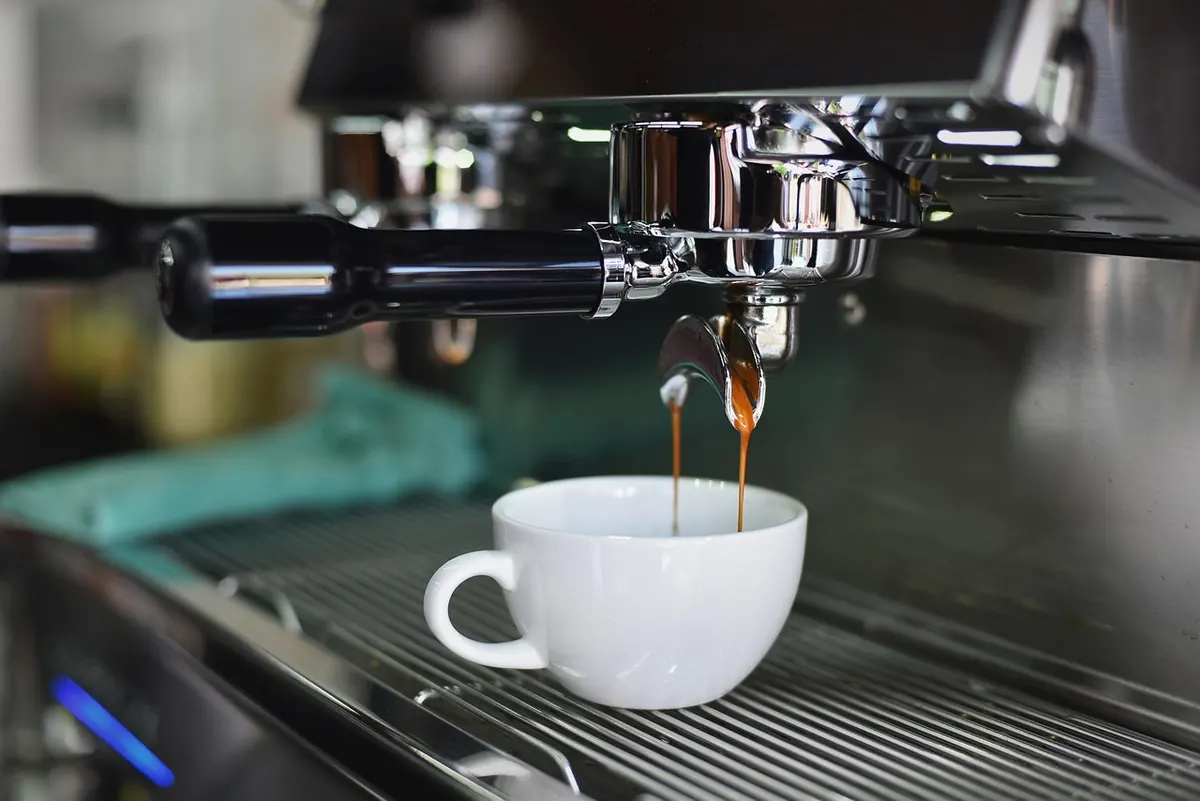
Watch the bottom of the basket as the shot starts. A healthy extraction begins as a few dark threads at the centre that merge into a slow, even flow within a handful of seconds. If liquid appears at the edges first, sprays sideways, or the stream turns pale blond while the shot is still young, water has found a shortcut. Fix distribution and tamp before you touch the grinder again.
Read Yield and Time Together
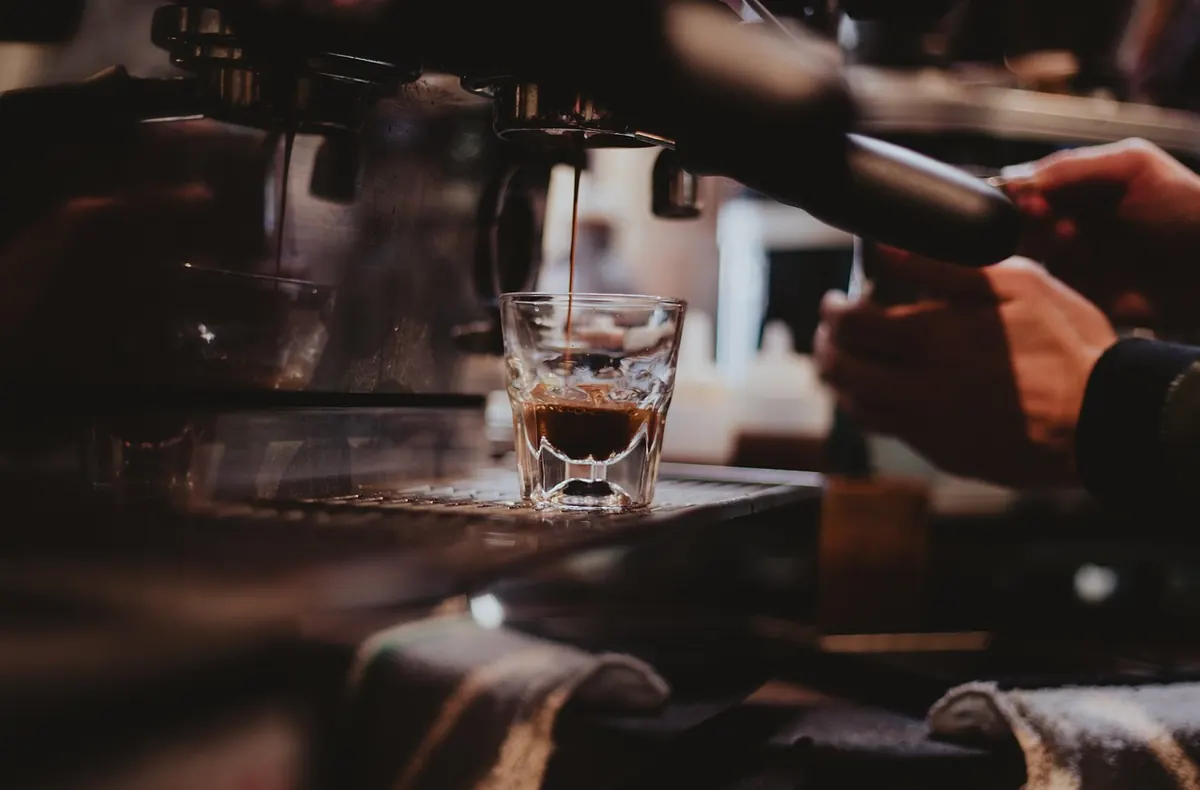
Set your scale under the cup, tare it, and start the shot. Write down three things: dose in, yield out, and the time from pump start to the moment you stop the pump. A sensible starting target is a 1:2 ratio — 18 g in, around 36 g out — landing somewhere between 25 and 32 seconds. Treat that window as a first guess, not a law.
The time on its own tells you very little. A shot that runs 30 seconds but only produces 20 g is choked; a 30-second shot that produces 55 g is running loose. That's why you weigh the output and let the clock describe what happened rather than dictate it. Stop the shot by weight, not by the timer, once you have a target in mind.
Taste First, Numbers Second
Now drink it, and wait for it to cool slightly — the faults show up more clearly at a warmer-than-tepid temperature. Sourness, a sharp finish and a thin body usually mean the shot is under-extracted. Dryness, a lingering bitter edge and an ashy finish usually mean over-extracted. Both can appear together when the puck channeled.
- Sour and thin? Grind finer, keep the dose, and aim for a slightly longer yield. Small steps.
- Bitter and drying? Grind coarser or cut the yield short by a few grams.
- Balanced but weak? Keep the ratio and grind finer to lift the body, or increase the dose if your basket allows it.
- Balanced but too intense? Lengthen the yield slightly rather than coarsening the grind.
One change, one shot, one taste. Two adjustments at once and you learn nothing about either.
Expect to pull four to six shots to land in the right zone with a new bag. That's not waste; it's the cost of the first good cup.
Keep Notes and Stay Consistent
A notebook or a note on your phone does more for your espresso than another accessory. Record the bean, the roast date, the dose, the grind setting, the yield and the time for each shot, plus a one-word taste verdict. After a few bags you'll notice patterns — your grinder's sweet spot for a medium roast, how much the setting drifts as beans age, how many grams you lose when you switch baskets.
As a bag approaches the end of its life, expect to grind finer to hold the same shot time. That's normal, and it's why a setting that worked perfectly two weeks ago can suddenly run fast.
A Ten-Minute Morning Routine
Warm the machine and the cup. Weigh your dose. Grind, stir, tamp. Lock in, place the scale, start the shot and watch the flow rather than the clock. Stop at your target weight, taste, and only adjust if something is clearly wrong. Then clean the basket and flush the group so the next shot starts from the same place this one did.
That routine, repeated, is what people mean when they say a machine is dialed in. It isn't a magic setting; it's a short sequence you trust enough to repeat. Get the dose fixed, let the grind do the work, weigh what comes out, and taste before you change anything. The balanced shot you're chasing is usually two small adjustments away.
Photo: StockSnap / Pixabay